Vol. 1 No. 1 (2026): Book -Toxicological and Ecological Stress in Fresh Water Fishes
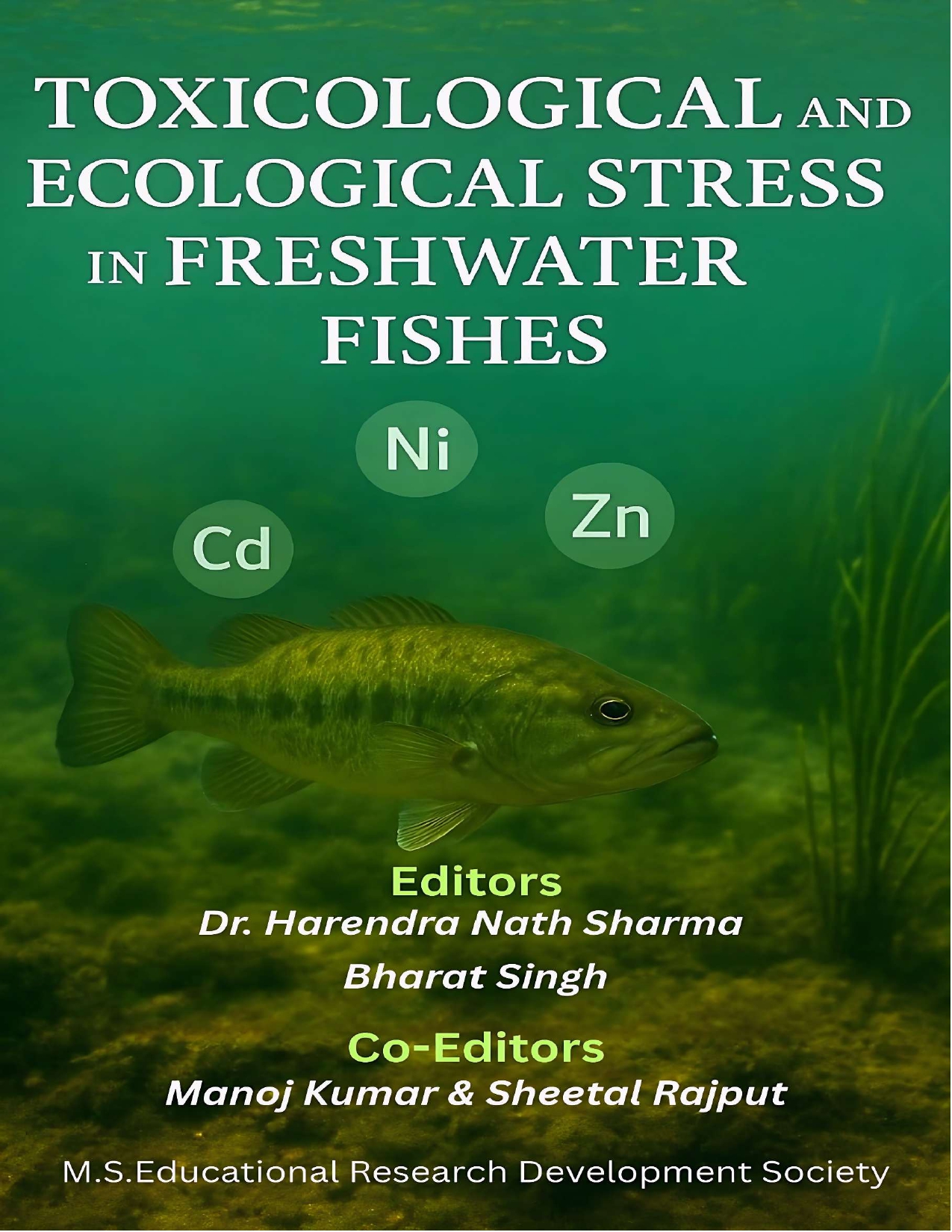
					View Vol. 1 No. 1 (2026): Book -Toxicological and Ecological Stress in Fresh Water Fishes

Freshwater ecosystems are among the most valuable and vulnerable components of the global environment, supporting a rich diversity of aquatic life and providing essential resources for human survival. Despite covering only a small fraction of the Earth's surface, these ecosystems play a crucial role in maintaining ecological balance, supporting fisheries, and sustaining livelihoods. However, increasing anthropogenic activities such as industrialization, urbanization, agricultural intensification, and climate change have imposed significant toxicological and ecological stress on freshwater environments. Fish, being integral components of aquatic ecosystems, serve as important bioindicators of environmental health. Exposure to pollutants such as heavy metals, pesticides, industrial effluents, and emerging contaminants can induce a wide range of physiological, biochemical, and genetic alterations in fish. These changes not only affect individual organisms but also disrupt population dynamics, food webs, and overall ecosystem stability. Understanding the mechanisms of toxicological stress and ecological responses in freshwater fishes is therefore essential for environmental monitoring, conservation, and sustainable resource management. This book, “Toxicological and Ecological Stress in Freshwater Fishes” aims to provide a comprehensive and systematic overview of the sources, mechanisms, and impacts of environmental stressors on freshwater fish species. It integrates fundamental concepts of aquatic toxicology with recent advancements in ecological risk assessment, biomarker studies, and environmental management strategies. Special emphasis has been given to oxidative stress, genotoxicity, endocrine disruption, bioaccumulation, and ecological consequences of pollution. The book is designed to serve as a valuable resource for undergraduate and postgraduate students, researchers, academicians, and environmental professionals. It will also be useful for policymakers and conservationists involved in aquatic ecosystem management and biodiversity protection. Efforts have been made to present the content in a clear, structured, and accessible manner, supported by relevant examples and scientific insights. We sincerely hope that this book will contribute to a better understanding of freshwater toxicology and inspire further research in this critical field. Constructive suggestions from readers are always welcome for improving future editions.

EDITORS

Dr. Harendra Nath Sharma

( MPhil, Ph.D., NET, FSLSc, SEFM, FESW, FSASc, FAESc, FABRF, MSERDS,
LMISCA )

Assistant Professor, Department of Zoology, Agra College Agra, Affiliated To Dr.
Bhimrao Ambedkar University, Agra, U.P

Mr. Bharat Singh

( M.Sc, Ph.D*
, FMSERDS )

Doctoral Candidate, Department of Zoology, Shri Varshney College, Aligarh
Affiliated To Raja Mahendra Pratap Singh University, Aligarh, U.P

CO- EDITORS

Mr. Manoj Kumar

( M.Sc, Ph.D* )
Doctoral Candidate, Department of Zoology, Shri Varshney College, Aligarh
Affiliated To Raja Mahendra Pratap Singh University, Aligarh, U.P

Miss. Sheetal Rajput

( M.Sc, Ph.D )
Doctoral Candidate, Department of Zoology, Shri Varshney College, Aligarh
Affiliated To Raja Mahendra Pratap Singh University, Aligarh, U.P

Published: 2026-04-22

Book Chapters

  • Chapter 1: Heavy Metal Toxicity In Freshwater Fishes

    Ajit Kumar, Dr. Keshav Singh, Bharat Singh
    1-7
    DOI: https://doi.org/10.59436/
  • Chapter 2 :Toxicological Stress In Fishes Due To Climate Changes

    Deeksha Singh, Anand Pratap Singh, Dr. Sonal Singh, Bharat Singh
    8-15
    DOI: https://doi.org/10.59436/
  • Chapter 3: Fishes Habitat DegradaƟon: Possible Reasons

    Divya Goswami, Prof. Manish Maheshwari
    16-20
    DOI: https://doi.org/10.59436/
  • Chapter 4: Industrial Effluents And Their Impact On Freshwater Fish Health

    Dr. Mohd Shoeb
    21-28
    DOI: https://doi.org/10.59436/
  • Chapter 5: AnthropogenicStressors AndToxicological ImpactsOn Freshwater Biota

    Lalita Sogarwal, Dr. Meera Singh
    29-48
    DOI: https://doi.org/10.59436/
  • Chapter 6: ToxicokineƟcs And BiotransformaƟon Of XenobioƟcs In Fishes

    Shivendra Pratap Singh, Sunil Kumar, Dr. Amita Sarkar, Manoj Kumar
    49-64
    DOI: https://doi.org/10.59436/
  • Chapter 7: OxidaƟve Stress And AnƟoxidant Defense Mechanisms In Fishes

    Dr. Prem Sagar, Dr. Shalini Yadav
    65-76
    DOI: https://doi.org/10.59436/
  • Chapter 8: Role Of Freshwater Fishes As Bioindicators Of Aquatic Pollution

    Dr. Rafat Khan
    77-84
    DOI: https://doi.org/10.59436/
  • Chapter 9: InteracƟve Effects Of Climate Change And Environmental Toxicants On Fish Physiology And Health

    Rahul Kumar, Nikhil, Dr. Keshav Singh, Manoj Kumar
    85-93
    DOI: https://doi.org/10.59436/
  • Chapter 10: Epigenetic And Transgenerational Toxicity In Freshwater Fishes Exposed To Emerging Pollutants And Its Effects On Aquatic Life

    Ramneek Kumar Singh, Pooja, Bharat Singh, Sheetal Rajput
    94-108
    DOI: https://doi.org/10.59436/
  • Chapter 11: Habitat DegradaƟon Of Freshwater Fish

    Reena Kumari, Nidhi Gupta, Manoj Kumar
    109-115
    DOI: https://doi.org/10.59436/
  • Chapter 12: Toxicological Stress In Fish By PesƟcides

    Himanshi Goswami, Dr. Amita Sarkar, Sheetal Rajput, Bharat Singh
    116-125
    DOI: https://doi.org/10.59436/
  • Chapter 13: THE SYNERGISTIC EFFECTS OF HEAVY METALS AND MICROPLASTICS ON FRESH WATER FISH HEALTH

    Twinkle Chansoria, Dr. Harendra Nath Sharma
    126-134
    DOI: https://doi.org/10.59436/
  • Chapter 14: Endocrine DisrupƟon In Fish Due To Environmental ContaminaƟon

    Dr. Vishan Kumar, Prof. Manish Maheshwari, Prof. Surbhi Mittal
    135-153
    DOI: https://doi.org/10.59436/
  • Chapter 15: Ecotoxicological Impacts Of MicroplasƟcs And NanoplasƟcs On AquaƟc Organisms

    Yadvendra Singh, Dr. Keshav Singh, Bharat Singh, Shreya Singh, Sheetal Rajput
    154-163
    DOI: https://doi.org/10.59436/