ISSN : 2583-2093
SJIF 2022 Impact factor - 3.004
SJIF 2023 Impact factor - 5.065
SJIF 2024 Impact factor - 5.361

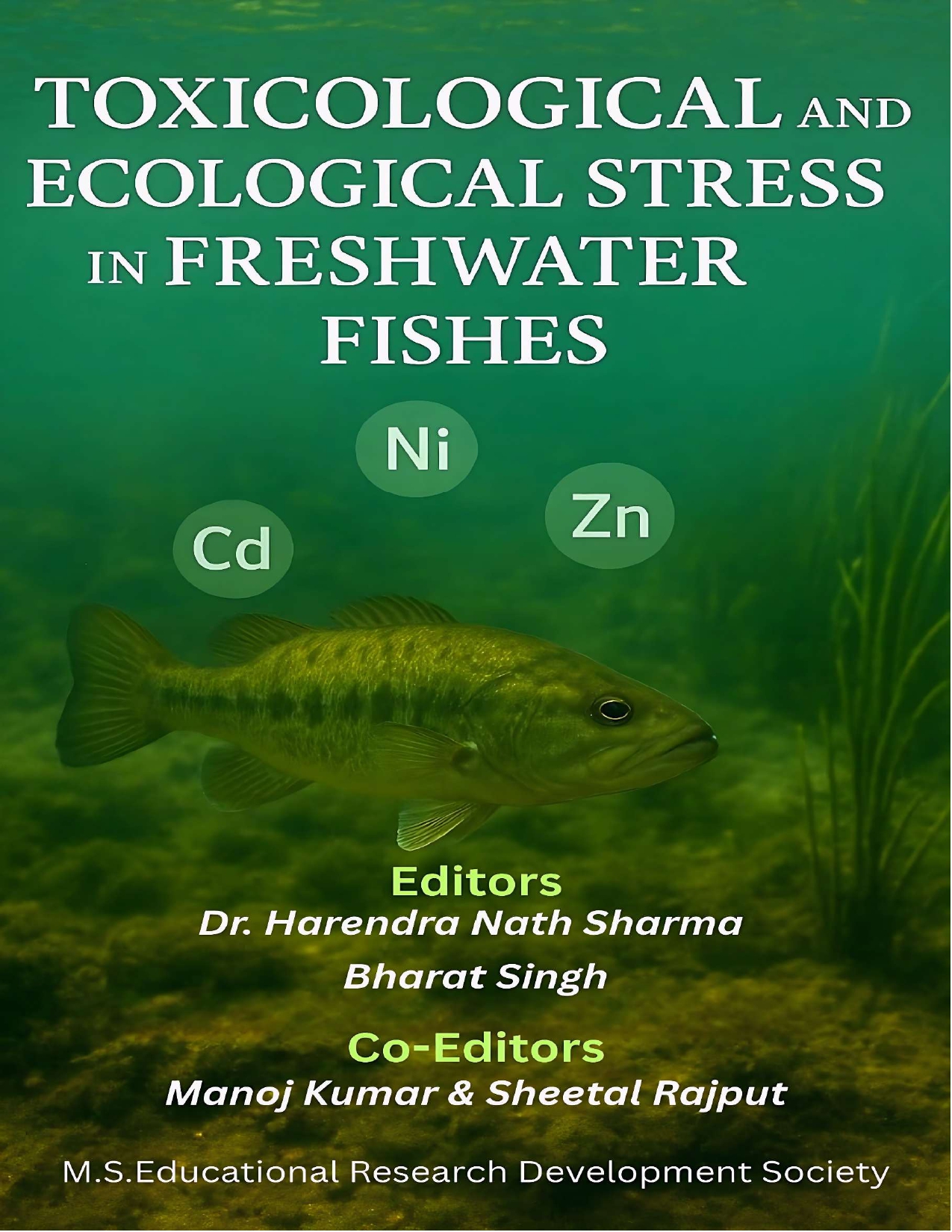
Freshwater ecosystems are among the most valuable and vulnerable components of the global environment, supporting a rich diversity of aquatic life and providing essential resources for human survival. Despite covering only a small fraction of the Earth's surface, these ecosystems play a crucial role in maintaining ecological balance, supporting fisheries, and sustaining livelihoods. However, increasing anthropogenic activities such as industrialization, urbanization, agricultural intensification, and climate change have imposed significant toxicological and ecological stress on freshwater environments. Fish, being integral components of aquatic ecosystems, serve as important bioindicators of environmental health. Exposure to pollutants such as heavy metals, pesticides, industrial effluents, and emerging contaminants can induce a wide range of physiological, biochemical, and genetic alterations in fish. These changes not only affect individual organisms but also disrupt population dynamics, food webs, and overall ecosystem stability. Understanding the mechanisms of toxicological stress and ecological responses in freshwater fishes is therefore essential for environmental monitoring, conservation, and sustainable resource management. This book, “Toxicological and Ecological Stress in Freshwater Fishes” aims to provide a comprehensive and systematic overview of the sources, mechanisms, and impacts of environmental stressors on freshwater fish species. It integrates fundamental concepts of aquatic toxicology with recent advancements in ecological risk assessment, biomarker studies, and environmental management strategies. Special emphasis has been given to oxidative stress, genotoxicity, endocrine disruption, bioaccumulation, and ecological consequences of pollution. The book is designed to serve as a valuable resource for undergraduate and postgraduate students, researchers, academicians, and environmental professionals. It will also be useful for policymakers and conservationists involved in aquatic ecosystem management and biodiversity protection. Efforts have been made to present the content in a clear, structured, and accessible manner, supported by relevant examples and scientific insights. We sincerely hope that this book will contribute to a better understanding of freshwater toxicology and inspire further research in this critical field. Constructive suggestions from readers are always welcome for improving future editions.
EDITORS
Dr. Harendra Nath Sharma
( MPhil, Ph.D., NET, FSLSc, SEFM, FESW, FSASc, FAESc, FABRF, MSERDS,
LMISCA )
Assistant Professor, Department of Zoology, Agra College Agra, Affiliated To Dr.
Bhimrao Ambedkar University, Agra, U.P
Mr. Bharat Singh
( M.Sc, Ph.D*
, FMSERDS )
Doctoral Candidate, Department of Zoology, Shri Varshney College, Aligarh
Affiliated To Raja Mahendra Pratap Singh University, Aligarh, U.P
CO- EDITORS
Mr. Manoj Kumar
( M.Sc, Ph.D* )
Doctoral Candidate, Department of Zoology, Shri Varshney College, Aligarh
Affiliated To Raja Mahendra Pratap Singh University, Aligarh, U.P
Miss. Sheetal Rajput
( M.Sc, Ph.D )
Doctoral Candidate, Department of Zoology, Shri Varshney College, Aligarh
Affiliated To Raja Mahendra Pratap Singh University, Aligarh, U.P
SJIF 2022 Impact factor - 3.004
SJIF 2023 Impact factor - 5.065
SJIF 2024 Impact factor - 5.361
Name: M. S. Educational Research Development Society
Secretory - Mr. Maharaj Singh
Address – Sahawar Gate, Nagla Beech Kasganj, District-Kasganj Uttar Pradesh, India 207123
Contact No - 9675528941, 6395614373
Whatsup support -9149267827
Email id - mserdsocietykasganjindia@gmail.com,
info@jsiane.com


Published under a Creative Commons Attribution 4.0 International License (CC BY 4.0).
© 2021 Journal of Science Innovations and Nature of Earth (website design and hosting rights reserved) | Powered by OJS | Customized & Designed by EduTechy