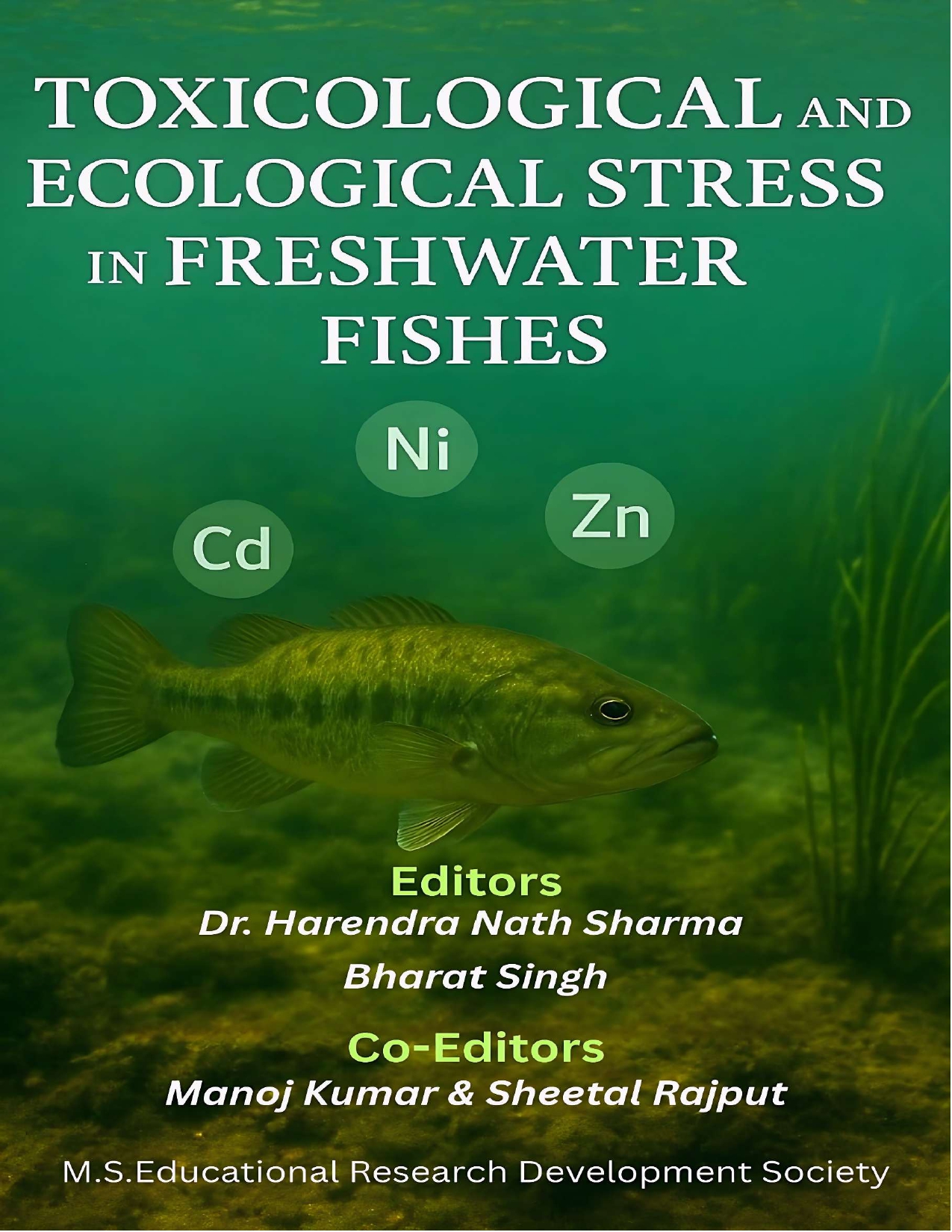
Chapter 12: Toxicological Stress In Fish By PesƟcides
DOI:
https://doi.org/10.59436/B978-81-971444-7-9/12Keywords:
Pesticide pollution, Agrochemical contamination, Aquatic ecosystems, Persistent organic pollutants, EcotoxicologyAbstract
Pesticides are using all over the world for more than half a century to control crops from broadleaf and certain grassland weeds. Their continuous widespread use has made them a critical problem in the environment, especially in aquatic habitats. The continuous application of synthetic chemicals in modern agriculture has resulted in various environmental concerns, indirectly they affect the aquatic ecosystems when. Among these chemicals, insecticides, which are used to prevent crops from insects; fungicides, which are used to avoid damage from fungi; herbicides, which are commonly used to manage unwanted vegetation; rodenticides, which are used to kill rodents and other vertebrates, have become a focal point due to their widespread usage and persistence in the environment. Hošťovský et al.(2014) investigate that certain group of herbicides, insecticides, fungicides and rodenticides including trazine, Dichlorodiphenyl- trichloroethane (DDT),Phosphide, Difenacoum respectively, are among the most commonly used globally.
Downloads
Published
Issue
Section
License
Copyright (c) 2026 Maharaj Singh Educational Research Development Society

This work is licensed under a Creative Commons Attribution 4.0 International License.