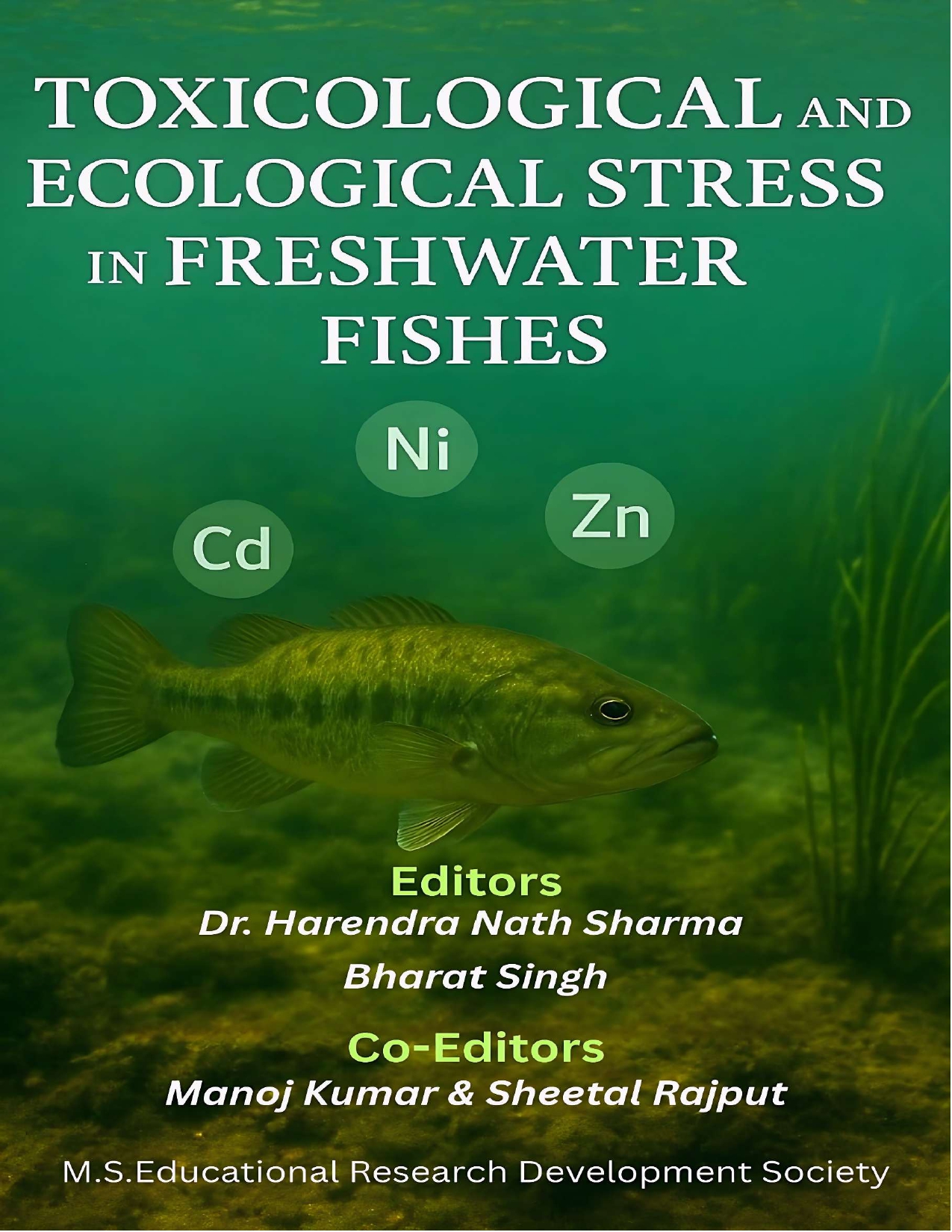
Chapter 14: Endocrine DisrupƟon In Fish Due To Environmental ContaminaƟon
DOI:
https://doi.org/10.59436/B978-81-971444-7-9/14Keywords:
Endocrine-disrupting chemicals (EDCs), Hormonal disruption, Reproductive toxicity, Aquatic contamination, Fish physiologyAbstract
Environmental contamination by industrial chemicals, pesticides, pharmaceuticals, and heavy metals has become a major concern for aquatic ecosystems. Many of these contaminants act as endocrine-disrupting chemicals (EDCs) that interfere with the hormonal regulation systems of fish. Endocrine disruption can alter growth, metabolism, reproduction, and development in aquatic organisms. Fish are particularly vulnerable to endocrine disruptors because they live in direct contact with contaminated water and sediments. Exposure to endocrine-disrupting pollutants may lead to feminization of males, impaired reproductive capacity, altered sex ratios, and developmental abnormalities. Several contaminants such as pesticides, plasticizers, pharmaceutical residues, and heavy metals have been reported to disrupt endocrine signaling pathways in fish. These chemicals may mimic natural hormones, block hormone receptors, or interfere with hormone synthesis and metabolism. The ecological consequences include reduced fish populations, impaired reproductive success, and disruption of aquatic food webs.
Downloads
Published
Issue
Section
License
Copyright (c) 2026 Maharaj Singh Educational Research Development Society

This work is licensed under a Creative Commons Attribution 4.0 International License.