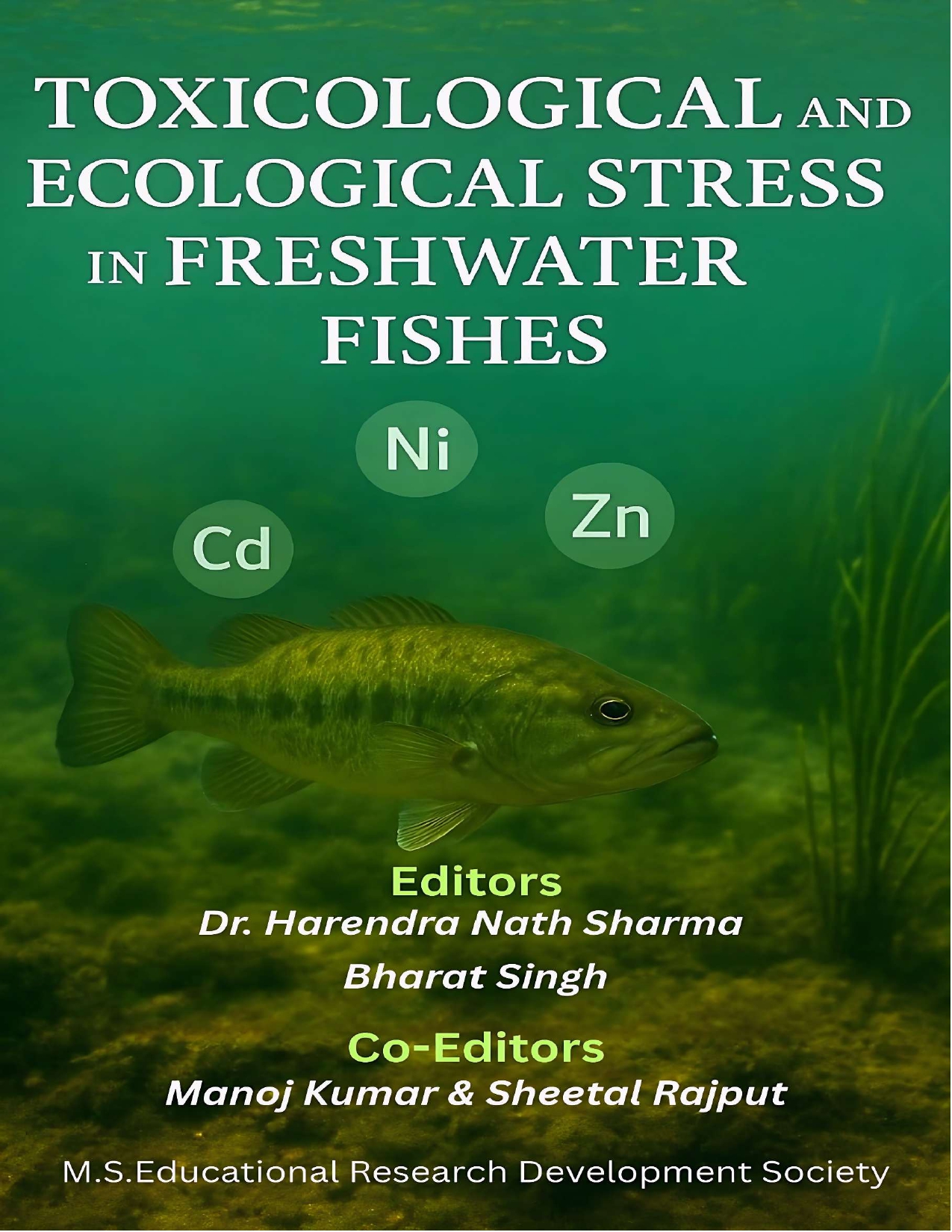
Chapter 15: Ecotoxicological Impacts Of MicroplasƟcs And NanoplasƟcs On AquaƟc Organisms
DOI:
https://doi.org/10.59436/B978-81-971444-7-9/15Keywords:
Microplastics, Nanoplastics, Plastic pollution, Aquatic ecosystems, Environmental contaminationAbstract
The rapid increase in global plastic production over the past few decades has resulted in a troubling buildup of plastic waste in our water bodies, which poses significant ecological and health risks. Among the various pollutants stemming from plastics, microplastics (MPs; less than 5 mm) and nanoplastics (NPs; less than 1 µm) have become particularly concerning due to their tiny size, durability, and widespread presence in freshwater, estuarine, and marine environments (Cole et al., 2011; Galloway et al., 2017). These tiny particles can either be primary plastics, which are intentionally made at such small sizes (like cosmetic microbeads and industrial abrasives), or secondary plastics, which form when larger plastic items break down and weather due to physical, chemical, and biological processes (Andrady, 2011).
Downloads
Published
Issue
Section
License
Copyright (c) 2026 Maharaj Singh Educational Research Development Society

This work is licensed under a Creative Commons Attribution 4.0 International License.